Tuesday, 14 April 2020

All, Some, Most


• All cars have wheels.
• Some cars can go faster than others.
• No cars  (= no cars allowed)
• I don't go out very often. I'm at home most days.

You cannot say 'all of cars', 'most of people' etc.
• Some people are very unfriendly, (not 'some of people')
 Note that we say most (not 'the most'):
• Most tourists don't visit this part of the town, (not 'the most tourists')

Some of... / most of... / none of... etc.
You can use some, most,   none and   half with of. 
You can say some of (the people),
most of (my friends), none of (this money) etc.

We use some of, most of (etc.) + the / this / that / these / those / my / his / Ann's... etc.

So we say: 
 Some of the people, some of those people (but not 'some of people')
Most of my friends, most of Ann's friends (but not 'most of friends')
None of this money, none of their money (but not 'none of money')

For example:
• Some of the people I work with are very friendly.
• None of this money is mine.
• Have you read any of these books?
• I wasn't well yesterday. I spent most of the day in bed.

You don't need of after all or half. So you can say:
• All my friends live in London, or All of my friends...
• Half this money is mine or  Half of this money....

Compare all... and all (of) the...:

• All flowers are beautiful. (= all flowers in general)
• All (of) the flowers in this garden are beautiful. (= a particular group of flowers)

You can use all of / some of / none of etc. + it/us/you/them:

 'How many of these people do you know? 'None of them.' / 'A few of them.'
• Do any of you want to come to a party tonight?
• 'Do you like this music? 'Some of it.  Not all of it.'

Before it/us/you/them you need of after all and half (all of, half of):

all of us (not 'all us')            half of them (not 'half them')

You can use the words in the box (and also none) alone, without a noun:
• Some cars have four doors and some have two.
• A few of the shops were open but most (of them) were closed.
• Half (of) this money is mine, and half (of it) is yours, (not 'the half)

Choose whether to write OF or 0 (X) in the boxes
1. All cars have wheels.

2. None this money is mine.

3. Some people get angry very easily.

4. I have lived in London most my life.

5. Some the people I met at the party were very interesting.

6. Many people watch too much TV.

7. Are any those letters for me?

8. Most days I get up before 7 o'clock

9. Jim thinks that all
museums are boring.

Answers in comment 1 

Source Learn English

Tuesday, 24 March 2020

Writing a Report


Visiting Seville, Spain

Go HERE and select the most relevant information to write a report of about 200 words. 

You can use some of these for your headings:   what to see, where to eat, when to visit, where to stay or how  to save money during your visit ...


An example of a report:

Thursday, 5 March 2020

Purpose and Contrast Clauses- Further Revision

Clauses of purpose

Clauses of purpose are used to show why something is happening. We can use ‘to’, ‘for’, ‘in order to’, ‘so as to’ and ‘so that’.
To

We often use ’to’ to show why something is happening. We use the infinitive form of the verb:
  • My mother went out to buy some milk.
  • ’m going to Spain to see my friend.
  • I’m going outside to find some flowers.

For

We use ‘for’ to show the exact purpose of something. It is followed by a noun or a gerund (-ing):
  • We went to the supermarket for bread.
  • The mop is for cleaning the floor.
  • She went out for a meal.

In order to

‘In order to’ is more formal than ‘to’. Again, we use the infinitive form of the verb:
  • I did some research in order to find the best music player.
  • A meeting was arranged in order to discuss the team’s progress.
  • Harry studied all night in order to pass his English exam.

So as to

‘So as to’ is also more formal than ‘to’. Again, we use the infinitive form of the verb:
  • I bought a smaller car so as to save money.
  • Elliot moved to a new house so as to be closer to his parents.
  • She left early so as to be at home with her family.

Note: When we want to say something negative using ‘in order to’ or ‘so as to’, we can put ‘not’ before the ‘to’.

For example:

– I woke up early in order not to miss the bus.
– I woke up early so as not to miss the bus.

So that

‘So that’ is paired with a subject and a modal verb like ‘could’, ‘would’, ‘can’ or ‘will’:
  • I gave her my phone number so that she could call me.
  • I’m going out so that I can buy fruit.
  • I did some exercise so that I would feel better.

Clauses of contrast

Clauses of contrast (or concession) are used to show the difference between two statements. We can use ‘although’, ‘though’, ‘even though’, ‘in spite of’ and ‘despite’.

Although

’Although’ can be used at the beginning or in the middle of a sentence. It is followed by a subject and a verb:
  • Although it rained, they enjoyed their walk.
  • They enjoyed their walk, although it rained.

Though

We use ‘though’ in a similar way to ‘although’, but it is more informal. In spoken English, ‘though’ is more common than ‘although’:
  • Though it was expensive, I enjoyed the meal.
  • I enjoyed the meal, though it was expensive.

Even though

‘Even though’ is a little stronger than ‘though’ and ‘although’. It can also be used at the beginning or in the middle of a sentence. Again, it is followed by a subject and a verb:
  • Even though I was full, I couldn’t stop eating.
  • I couldn’t stop eating, even though I was full.

In spite of

We use ‘in spite of’ at the beginning or in the middle of a sentence. It is followed by a noun, a pronoun or a gerund (-ing):
  • In spite of the pain, Harry finished the race.
  • Harry finished the race, in spite of the pain.

Despite

We use ‘despite’ at the beginning or in the middle of a sentence, too. Again, it is followed by a noun, a pronoun or a gerund (-ing):
  • Despite the snow, I drove to my grandma’s house.
  • I drove to my grandma’s house, despite the snow.

Note: Do not use ‘of’ with ‘despite’. For example:

– I drove to my grandma’s house, despite the snow.
NOT: I drove to my grandma’s house, despite of the snow.

You must use ‘of’ with ‘in spite of’. For example:

– I drove to my grandma’s house, in spite of the snow.
NOT: I drove to my grandma’s house, in spite the snow.SOURCE: https://grammartop.com/adverbial-clauses-of-contrast-and-purpose/

GO HERE to practice!
Click here for more!

Thursday, 20 February 2020

Listening (3)


Click HERE to listen to Task 1

Click HERE to listen to Task 2

Click HERE for Task 3


Wednesday, 12 February 2020

Listening Practice (2)


Click HERE to hear the 2nd practice on Listening! :-)

Monday, 10 February 2020

Monday, 3 February 2020

Writing: OPINION ESSAYS


TIPS:

  • First read the rubric and make sure you understand what you are expected to write about.
  • Decide whether you agree or disagree with the statement.
  • Write a PLAN : think about your topic and write down ideas, words and phrases related to the topic.
  • Group your ideas and put them in a logical order.

  • An opinion essay is a formal piece of writing, therefore you cannot use informal language.
  • It requires your opinion on a topic, which must be stated clearly and supported by reasons or examples.


An opinion essay should consist of:

 An INTRODUCTION has three elements:

1. opening statement - a hook (it grabs reader`s attention)
2. background information about the topic
3. a clear opinion statement (your position)


A MAIN BODY (DEVELOPMENT) with 2 or 3 supporting paragraphs: Each paragraph presents a different argument supported by details/examples/reasons/justifications.

A CONCLUSION has three elements:

1. a reformulated opinion/Reinforced opinion
2. summary of the main arguments presented in your text
3. a closing statement that makes your reader reflect on the issue (a recommendation, suggestion, an intelligent question)


REMEMBER:
~        Write well-developed paragraphs.
~        Write clear ideas, be specific, explain things well .
~        GRAMMAR: use present tenses, the passive voice and if possible, conditional sentences (types 2 and 3) and in general B2 grammar.
~        VOCABULARY of the topic.
~        Use connectors and linking words/ phrases (transition words) to make your writing more interesting to the reader, and easier to understand. BUT do not overuse those connectors!

TO EXPRESS OPINION
·        In my opinion,
·         Personally, I think/ I believe (that
·           I strongly believe that….
·           It is clear (to me) that
·           I (completely) agree/disagree with …
·           As I see it, …
·           In my view,...
·           From my point of view, …
·           As far I am concerned, ...
·           I am sure/ convinced that …

TO EXPRESS FACTS
  • It is widely known that…
  • It is a well-known fact that …
  • Research has shown that…
  • There are definitely…
  • It is a fact that…
  • It is clear/ true that…
  • For example/ for instance,...
  • Such as...
  • Like...

TO EXPRESS CONTRAST
  • Although… Despite… ...In spite of ...Whereas ...However....
  • In contrast... /but.../ Nevertheless... 
  • On the one hand... /on the other hand...

  • TO EXPRESS PURPOSE
  • So (that)
  • In order to...
  • To...
  • So as to...

TO GIVE REASONS
·      My main reason is…./Another reason…
·      One reason for… is ….
·      Many people say/ believe that…
·      Because… Since…Because of/ due to...

TO ADD IDEAS
·             What is more,…
·             Moreover/ furthermore/ in addition (to)/ Besides
·             Firstly,…First of all,…Secondly,..Thirdly,…Lastly,… Finally,…


TO CONCLUDE
  • To sum up,…
  • To conclude...
  • In conclusion...
  • All things considered
  • All in all…


Find further info HERE

See some examples from the British Council


Tuesday, 28 January 2020

Crime And Punishment


Unit 8A

These days in class we've been looking at the unit of crime.

Click HERE and do a listening activity about Security.

Click HERE to do some Passive voice exercises...


Watch this video now to revise and extend your 'Crime' Vocabulary:


Have a nice weekend!

Monday, 4 November 2019

HOMEWORK

Read the texts and then answer the questions below.

TEXT 1: Water, Air and Soil Contamination

air pollutionPollution is an environmental concern for people throughout the world. One university study suggests that pollutants in the water, air, and soil cause up to 40% of the premature deaths in the world's population. The majority of these deaths occur in developing countries.

Water in many developing countries is contaminated with toxic chemicals, also known as toxins. The World Health Organization (WHO) estimates that 1.1 billion people have little or no access to clean water. In many of these regions the water that is used for drinking, cooking, and washing is the same water that is used for dumping sewage and hazardous waste. Most developing countries cannot afford water treatment facilities. Approximately 80% of infectious diseases in the world are caused by contaminated water.

Air pollution is a growing problem throughout the world. Indoor air pollution is one of the leading causes of lung cancer. Families in developing countries use open stoves for cooking and heating their homes. These homes do not have proper ventilation. The smoke, which is full of chemicals and carcinogens, gets trapped inside where families eat and sleep. Outdoor pollution also causes disease and illness, especially in industrial cities such as Beijing, China, where cancer is the leading cause of death. China relies heavily on coal, which is considered the dirtiest source of energy. According to the European Union, only 1% of urban dwellers in China breathe clean air on an average day. Neighbouring countries including Japan and Korea receive much of China's pollution in the form of acid rain. This pollution results mainly from the coal powered factories, which produce inexpensive goods for North American and European consumers. Outdoor air pollution is also a concern in many wealthy countries. Those who live and work in urban centres such as Los Angeles or Toronto experience many warm days beneath a layer of smog.

Soil pollution is also a major concern, both in industrial and developing countries. Pollutants such as metals and pesticides seep into the earth's soil and contaminate the food supply. Soil pollution causes major health risks to entire ecosystems. This type of pollution reduces the amount of land suitable for agricultural production and contributes to global food shortages. Dumping of industrial and domestic waste products produces much of the world's soil pollution, though natural disasters can also add to the problem. In wealthy countries such as the US, protection agencies monitor the food supply. The public is generally warned before major disease outbreaks occur. Developing countries do not have this luxury. Farmers in poor nations grow food in contaminated soil both to earn a living and to avoid starvation.

As more people move to urban centres, premature deaths caused by pollution are expected to increase worldwide. Today, the developed nations who achieved their wealth at the expense of the environment will be held accountable for protecting the earth's resources for future generations.
                         
                                                                                                                          (Source Englishclub. com)

 Quiz

1. A university study suggests that up to 40% of the world's premature deaths are caused by
 developing countries
 disease outbreaks
 pollutants
2. In many developing countries people use _______ contaminated by hazardous waste and sewage.
 water
 air
 facilities
3. _______ regions are often contaminated with air pollution.
 Chemical
 Carcinogenic
 Industrial
4. What do open windows and fans that extract smoke provide?
 contamination
 ventilation
 indoor pollution
5. The article implies that most of China's air pollution is caused by
 Japan and Korea
 burning coal
 acid rain
6. According to the article, where is cancer the leading cause of death?
 Beijing
 Los Angeles
 the European Union
7. Which is NOT mentioned as a source of soil pollution?
 hazardous wastes
 use of pesticides
 smoke from factories
8. Soil pollution is a major concern in _______ countries.
 industrial
 developing
 industrial and developing
9. Industrial metals and pesticides seep into the earth's soil and contaminate our
 food supply
 food shortages
 disease outbreaks
10. Premature deaths caused by pollution are expected to increase as more people move to
 developed nations
 urban centres
 country towns

TEXT 2: Will there be Life after Oil ?

Answer: Yes. The twentieth century was the century of OIL; but the twenty-first will be the age of cleaner types of fuel. It will have to be.
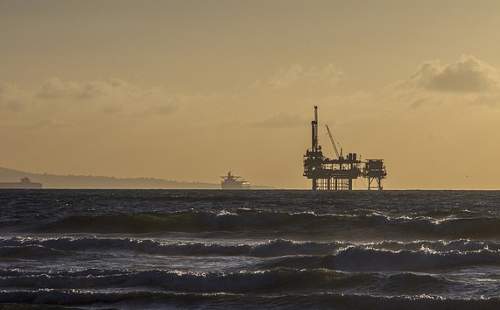
       
Offshore oil
Oil will not last for ever; and extracting it will become much more expensive
     To start with, we cannot go on using oil for ever. We can do so for a few more decades - perhaps until 2070, then it will run out. There will be none left - or at least, there will be hardly any left.

    At present, there is still plenty of oil under the ground. There is oil under the North Sea and under the Atlantic Ocean. Engineers keep finding new sources of oil. But there are some realities which cannot be avoided.
    a) The quantity of oil under the ground and under the sea is not infinite. It will not last for ever.
    b) As oil becomes rarer, it will become harder to extract. It will also become more and more expensive. It will therefore become more expensive than other fuels.
    c) Oil will always cause pollution.
    Of course, there are also other truths:
    d) Scientists are making new forms of oil, using plants.
    e) Most of the oil that we eat comes from plants; and it is sometimes possible to make petrol from this oil. For instance, some types of diesel-fuel already contain sun-flower oil.
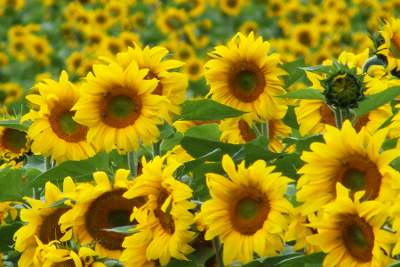
Sunflowers make oil
Sunflowers produce oil too; but most of this oil is needed for cooking.
    Sun-flower oil is cleaner than mineral oil, so it causes less pollution. But perhaps, in the long term, vegetable oils are not a good solution for the future;  in the future we may need all the land for producing food.
    In reality, the future will have to be a future without oil - or with very little oil.
    Scientists are already developing cars, houses and plastics that do not use oil. Electricity will be the energy of the third millennium, but it will have to be clean electricity.
    Today, electricity is produced in Britain in several different ways; some of it is produced using oil; but already oil-burning power-stations are being closed. Nuclear power-stations will be closed too, because they are very expensive and people do not want them.
    Tomorrow's electricity will be made from gas, and from "renewable sources".
    In the short term, gas will be an important source of energy. It is cleaner than oil, and easier to extract. There is also a lot more gas than oil under the ground! Gas can be used in cars and houses too.
    In the long term, all our energy will come from "renewable sources" -  including water! The sun, the wind, the rivers and the oceans will give us all the energy that we need! It will be clean energy - with no pollution - and it will last for ever.
    We are not there yet, however! The twenty-first century will be a century of change. People who are over 50 today are not going to see a world without oil. Those who are under twenty may perhaps do so...... if they live long enough.
SOURCE Linguapress 


Reusing information :

Complete this summary of the article, putting appropriate words in the blanks
    Oil is one of the most important __________ of  ___________ in today's world; but unless we ____________ finding more and more, it will not ___________ for ____________. In less than a century, it will ______ ______.
    Most of the oil we _____ comes from the ground, but some comes from _______ . But plants cannot produce all the oil we ________.
    In tomorrow's world, we will use ______ oil and more ____________, but most of this will have to come from _______________ ___________.
    In the _______ _______ we will use a lot of ___________, but later we will have to get our _____________ from natural forces.

Answers in CLASS!!


Environment Vocabulary